



Quick answer: Most iron infusion side effects are mild. Headache and dizziness are the most common. Some people notice a metallic taste. These usually fade within a few days. Serious allergic reactions are rare but need emergency care.
You booked an iron infusion and now you want to know how you will feel afterward. That is a fair question. Iron infusion side effects are usually mild and pass within days. A few are rare but serious. Knowing the difference helps you stay calm and act fast when it matters.
The Royal Berkshire NHS Foundation Trust reports that nausea was the most common of the iron infusion side effects in clinical studies and affected fewer than 3 in 100 patients. Australia’s healthdirect service says fewer than 1 in 100 people have a severe allergic reaction. Those numbers are reassuring. They are also a reason to know the warning signs.
This guide covers the common iron infusion side effects and a day-by-day timeline. It also explains the rare reactions that need a doctor. Dr. Bahman Adham at Trusta Medical Center in Downtown Dubai reviews every patient before an infusion. Read on to learn what to expect and what to ask at your appointment.
What an Iron Infusion Does
Iron infusion delivers iron straight into a vein. It skips the gut so poor absorption does not limit the dose. Doctors use it when iron tablets fail or cause stomach trouble. Trusta Medical Center offers iron infusion in Dubai after blood tests confirm low iron.
Dr. Bahman Adham first reviews your blood tests. These cover your full blood count and haemoglobin. They also cover ferritin and transferrin saturation. He then explains which iron product he has chosen and why. The product matters because side effects differ between iron types.
Common Iron Infusion Side Effects
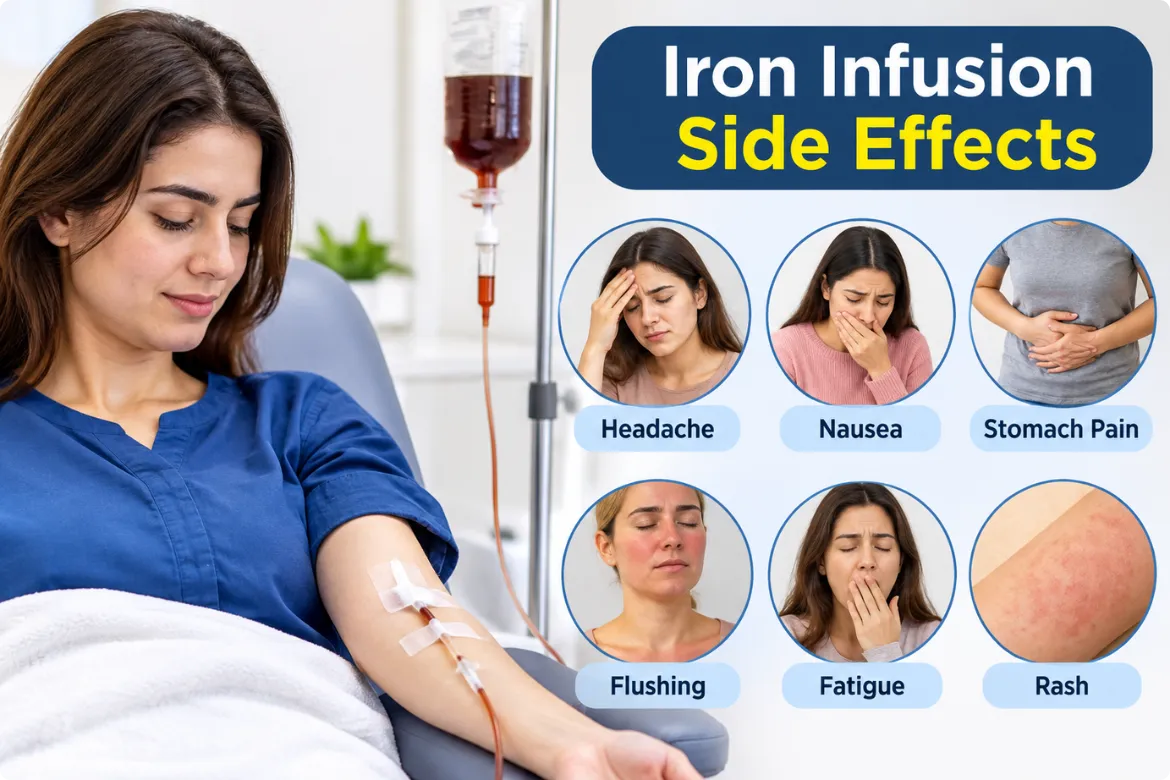
The most common iron infusion side effects are headache and dizziness. Nausea and a metallic taste are also common. Flushing and muscle aches complete the list. Most need no treatment.
Headache and Dizziness
Headache and dizziness fall into the common group. NHS trust information puts them between 1 in 10 and 1 in 100 patients. Stand up slowly after the infusion. Sit down at once if you feel lightheaded. Tell the care team before you leave the chair.
Nausea and a Metallic Taste
Nausea was the most reported effect in clinical studies. Feeling sick after an iron infusion usually passes within hours. A metallic taste in your mouth is also common during the infusion. Ask the care team to slow the drip when nausea builds. Sipping water helps some patients.
Flushing and Blood Pressure Changes
Your cheeks or neck may turn red. Blood pressure or pulse may also shift for a short time. The care team checks your vital signs during the infusion and watches you afterward. Report chest tightness or a racing heartbeat straight away.
Muscle and Joint Aches
Some people feel aching muscles or sore joints. These iron infusion side effects can start 1 to 2 days after the infusion. They usually settle by themselves over a few days. Rest and gentle movement are fine. Ask Dr. Bahman Adham which pain relief suits you.
Pain at the Injection Site
A small bruise or sore spot can follow any needle. Read the guide to IV drip side effects for needle-site problems in full. Tell the care team about burning or pain during the infusion itself.

Iron Infusion Side Effects Timeline
Most iron infusion side effects appear during the infusion or within 48 hours. They fade by the end of the first week. A few arrive later. Here is what to expect.
During the Infusion
A metallic taste or flushing can start while the iron runs. Dizziness and nausea can show up too. The care team watches you and can slow or stop the infusion. Speak up the moment something feels wrong. Burning or swelling at the needle site needs attention right away.
The First 48 Hours
Headache and tiredness are common on the first evening. Aching muscles or joints may start on day 1 or day 2. Some people feel run down. A mild fever after an iron infusion can come with the aches. Plan a quiet afternoon and avoid hard exercise on infusion day. Book a morning slot so you can rest after.
Days 3 to 14
Most iron infusion side effects have gone by day 5 or day 7. Fatigue from the iron deficiency itself may take longer to lift. Some people notice more energy within several weeks. Others need more time. This depends on how low your iron and haemoglobin were. Phosphate can dip around 2 weeks after an infusion. Your doctor decides whether a phosphate check suits you.
Rare but Serious Iron Infusion Side Effects
Serious iron infusion side effects are rare. They fall into three groups. Allergic reactions come first. Low phosphate and skin staining follow.
Allergic Reaction
A severe allergic iron infusion reaction affects fewer than 1 in 100 people. It usually starts during the infusion or soon after. Signs include trouble breathing and swelling of the lips or face. Widespread rash and chest tightness also count. The care team stops the infusion at once and treats the reaction. Call 998 if signs appear after you leave the clinic.
Known allergies raise the risk of serious iron infusion side effects. So do immune conditions and a history of severe asthma or eczema. Tell Dr. Bahman Adham about all of them before treatment.
Low Phosphate After an Infusion
Some iron products can lower the phosphate level in your blood. The lowest point comes about 2 weeks after the infusion. Case reports link severe drops mostly to ferric carboxymaltose. They also link them to patients who take denosumab for bone health.
Low phosphate can cause muscle weakness and bone pain. Tell Dr. Bahman Adham about either symptom in the weeks after your infusion. A blood test can check your phosphate level.
An Australian patient told ABC News in October 2026 that staining on her arm was the only risk she heard about before her infusion. She said she later developed severe low phosphate and spent time in an induced coma. Severe cases are uncommon. Doctors report them more often now. Ask about every risk before you agree to treatment. A nurses’ consensus paper on PMC explains how care teams manage infusion reactions and low phosphate.
Skin Staining at the Injection Site
Iron can leak from the vein into the tissue around the needle. This can change the skin colour near the needle site. It is very rare. Tell the care team straight away when the needle site burns or swells. Early action limits the damage.
Side Effects of Iron Tablets Compared With an Infusion
Iron tablets often cause stomach side effects. Constipation and stomach pain are typical. An infusion skips the gut so those effects do not apply. It brings the iron infusion side effects listed above instead. A patient who stopped tablets after weeks of stomach pain may find an infusion easier to tolerate. Neither option is better for everyone. Dr. Bahman Adham looks at how you coped with tablets before he suggests an infusion.
How Dr. Bahman Adham Lowers the Risk
Dr. Bahman Adham confirms low iron before any infusion. He does not give iron because of tiredness alone. This assessment lowers the risk of iron infusion side effects. It covers six points:
- Blood tests that confirm iron deficiency
- A review of your symptoms and medical history
- A check of earlier iron tablets and how you coped
- A review of your allergies and your medicines
- A clear choice of iron product with the reasons explained
- Monitoring during the infusion and after it
Tell him about every medicine and supplement you take. Mention any bone medicine too. After the infusion he explains what to expect at home and books any follow-up blood tests.
How to Prepare and Recover at Home
A little preparation lowers your chance of feeling unwell. Eat a light meal and drink water before you arrive. Bring your recent blood results and a list of your medicines. Book a morning slot so you can rest in the afternoon.
These steps help ease iron infusion side effects after the infusion:
- Rest for the remainder of the day
- Drink water through the afternoon
- Stand up slowly if you feel lightheaded
- Skip hard exercise until you feel well
- Keep your follow-up blood test appointment
When to Call a Doctor and When to Call 998
Some iron infusion side effects need urgent help. Others need a same-day call to the clinic.
Call 998 Straight Away
Call 998 for any of these signs:
- Trouble breathing
- Swelling of the lips or face
- Chest pain or tightness
- Fainting
- A widespread rash
These can signal a severe allergic reaction. Do not wait to see if they pass.
Call Trusta Medical Center the Same Day
- A fever that lasts or returns
- Redness or pain that spreads around the needle site
- Swelling or dark staining near the needle site
- Aches that get worse instead of settling
- Dizziness or headache that does not ease
- Muscle weakness or bone pain in the weeks after the infusion
Call +971 54 333 9090 or email info@trustaclinic.ae. The clinic is open every day from 09:30 to 22:30.
Who Should Not Have an Iron Infusion
An iron infusion is a prescription treatment so safety checks come first. It is not suitable in these cases:
- Your tests do not show iron deficiency
- You have had an allergic reaction to an IV iron product before
- Your body already holds too much iron
Dr. Bahman Adham also needs to know about pregnancy and breastfeeding. Infections and other medical conditions matter too. He decides whether treatment is right and when.
Normal iron levels do not rule out fatigue. Many other causes exist. You can ask Dr. Bahman Adham about the Energy Boost IV Drip when your iron results are normal.
Questions to Ask Before Your Infusion
Come with questions. Dr. Bahman Adham expects them. These five cover the main safety points:
- Which iron product will I receive and why
- What risks come with that product
- Do I need a phosphate check after the infusion
- Which symptoms mean I should call the clinic
- When will I have my follow-up blood test
Book an Iron Infusion Consultation
Iron infusion side effects are usually mild and pass within days. Headache and dizziness are the most common. Allergic reactions and low phosphate are rare but serious. Know the warning signs and call early.
Dr. Bahman Adham confirms low iron first and explains every risk before treatment. Book a consultation at Trusta Medical Center in Downtown Dubai to find out whether an infusion suits you. Bring recent blood results and a list of your medicines. Which side effect worries you most?
FAQs
Is an iron infusion safe?
Iron infusion is safe for most people when a doctor confirms low iron and a care team monitors the infusion. Serious reactions are rare. Dr. Bahman Adham reviews your blood tests and allergy history first. He also watches you during and after the infusion.
How long do iron infusion side effects last?
Most iron infusion side effects last from a few hours to a few days. Aches that start on day 1 or day 2 usually settle by themselves. Low phosphate can appear around 2 weeks later. Tell the doctor about any symptom that lingers.
Why do I feel tired or achy after an iron infusion?
Aches and tiredness are common in the first 48 hours. The iron deficiency itself also needs time to recover. Rest and water help. Contact the clinic when symptoms get worse instead of settling.
Can I drive home after an iron infusion?
Most people return to normal activity when they feel well. Dizziness is a common side effect. Arrange a lift when you feel lightheaded. Ask the care team before you leave.
When will my energy improve?
Some people notice less fatigue within several weeks. Others need longer. The speed depends on how low your iron and hemoglobin were. A follow-up blood test shows how your iron is recovering.
